
Updated for 2026 – Temple dates, darshan timings, registration process & travel routes reviewed
Badrinath Dham – History, Meaning & Significance
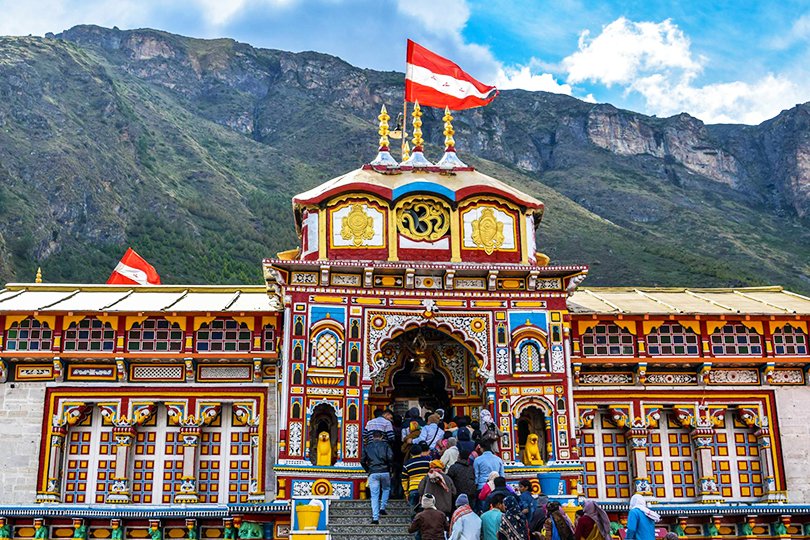
Badrinath Dham, one of the most sacred pilgrimage sites of India, holds a timeless charm for devotees and travelers alike. Dedicated to Lord Vishnu, this temple is a part of the Char Dham Yatra and attracts lakhs of pilgrims every year.
Situated in Chamoli district of Uttarakhand, the temple stands at an elevation of 3,133 meters (10,279 feet), surrounded by snow-clad Himalayan peaks and the serene Alaknanda River.
The temple is uniquely located between the twin mountains of Nar and Narayan, which adds to its divine presence and spiritual importance. The word “Badrinath” comes from the Sanskrit term Badri (berry tree) and Nath (Lord). According to legends, Lord Vishnu meditated here under the shade of a Badri tree while Goddess Lakshmi protected him in the form of berries.
This deep connection between divinity and nature makes Badrinath Dham not only a spiritual destination but also a place of fascinating mythology and cultural heritage.
Historically, the shrine was re-established by Adi Guru Shankaracharya in the 8th century, making it a major center of Vaishnavite worship. Over time, it became one of the 108 Divya Desams, the holiest shrines dedicated to Lord Vishnu.
Its rich history, combined with breathtaking Himalayan landscapes, makes Badrinath Temple an unmissable part of your Char Dham Yatra.
In this Badrinath Dham Yatra Guide 2026, we will cover the temple’s history, darshan timings, best time to visit, travel routes, and nearby attractions to help you experience this divine journey with ease.
Whether you are a pilgrim seeking blessings or a traveler looking for a soulful Himalayan escape, Badrinath promises a once-in-a-lifetime experience.
Enjoy the beauty of nature, think before you trash it.
प्रकृति की सुंदरता का आनंद लें, इसे कूड़ा करकट, नष्ट करने से पहले सोचें।
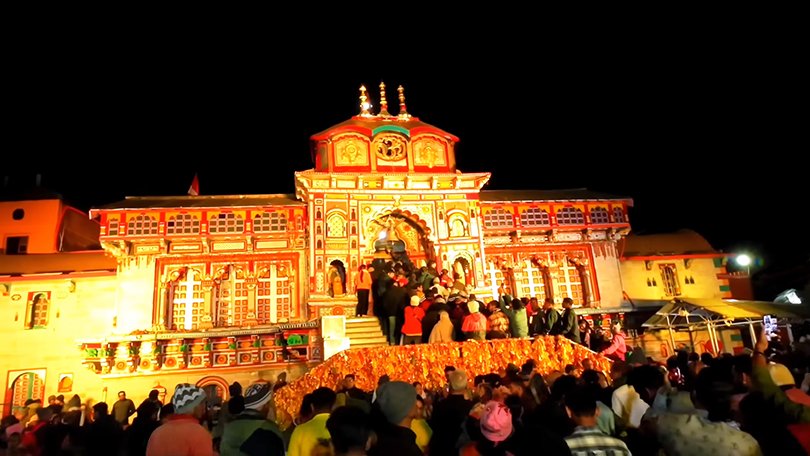
Badrinath Dham Yatra Guide 2026 – Daily Darshan Timings & Aarti Details
Planning your visit becomes easier when you know the exact temple schedule. Here are the Expected darshan timings for Badrinath Temple (2026):
Morning Darshan
- Temple opens at 4:30 AM with Mahabhishek Puja.
- Morning darshan continues till 1:00 PM.
Afternoon Break
- Temple remains closed from 1:00 PM to 4:00 PM for rituals and preparations.
Evening Darshan
- Reopens at 4:00 PM.
- Evening aarti and darshan continue till 9:00 PM.
- The day ends with the sacred Shayan Aarti around 8:30 PM.
Special Notes for 2026 Yatra Season
- Temple remains open from May to November every year.
- Winter closure happens due to heavy snowfall.
- Special pujas like Mahabhishek and Shayan Aarti require advance booking.
- Exact opening and closing dates of the temple will be announced before the yatra begins.
Note: Darshan timings and opening dates for 2026 are tentative and may change based on temple committee announcements.
How to Register for Char Dham Yatra 2026 (Badrinath, Kedarnath, Gangotri & Yamunotri)
Is Registration Mandatory?
- Yes, Registration is compulsory for every pilgrim visiting Badrinath, Kedarnath, Gangotri, and Yamunotri. The Government of Uttarakhand has made it mandatory to ensure the safety, security, and proper management of Char Dham Yatra 2026. Without registration, entry is not allowed at any of the temples.
Registration dates for Char Dham Yatra 2026 are usually announced in March–April.
Online Registration Process
- Pilgrims can register online through the official portal of Tourist Care Uttarakhand:
- Website: https://registrationandtouristcare.uk.gov.in
Offline Registration Process
- Offline & biometric registration counters are available at Haridwar, Rishikesh, Dehradun, Sonprayag, Janki Chatti, Guptkashi, Phata, and other locations on the route.
- Pilgrims can register by showing their ID and filling in a short form at these counters.
Required documents
- Valid photo ID proof (Aadhaar, Voter ID, Driving License, Passport etc.) and a recent photo.
- Foreign nationals must also complete registration using passport details.
Why Registration is Important?
- Ensures safety and monitoring of pilgrims.
- Required for medical and emergency support during the yatra.
- Helps the administration control the number of daily visitors at each Dham.
- A must for booking helicopter services (especially for Kedarnath).
How to Reach Badrinath Dham (2026)
Reaching Badrinath Temple is possible by air, rail, and road, making it accessible for pilgrims and travelers. Here’s a travel guide for your Badrinath pilgrimage:
Travel Route to Badrinath Dham:
Haridwar → Rishikesh → Devprayag → Srinagar → Rudraprayag → Karnaprayag → Nandprayag → Joshimath → Badrinath Dham
By Air:
- Nearest airport: Jolly Grant Airport, Dehradun (320 km).
- Taxis and buses available from the airport to Badrinath.
- Helicopter services to Govindghat and nearby helipads can also be booked during the yatra season.
By Rail:
- Nearest railway station: Rishikesh (290 km).
- Haridwar (310 km) and Dehradun (340 km) are also convenient options.
- From stations, buses and taxis connect directly to Badrinath.
By Road:
- Well-connected by NH-7 from Rishikesh, Haridwar, and Dehradun.
- Regular buses (GMOU & private) and taxis are available.
- Roads may be affected by landslides during the monsoon; check conditions before travel.
From Kedarnath:
Kedarnath Dham → Gaurikund (16 km trek) → Sonprayag → Guptkashi → Rudraprayag → Karnaprayag → Nandprayag → Joshimath → Badrinath Dham
- Kedarnath to Badrinath: approx. 230 km by road, not including the trek from Kedarnath to Gaurikund 16 km.
- Travel time: around 10–12 hours by road depending on weather and traffic.
Travel Tips – Badrinath Dham Yatra Guide 2026
Here are some useful travel tips to make your Badrinath pilgrimage safe, comfortable, and memorable.
- Registration is Mandatory: Do not forget to complete your Char Dham Yatra 2026 registration online, https://registrationandtouristcare.uk.gov.in or at offline counters. Carry your Yatra Card with you at all times.
- Clothing: Carry warm clothes, woolens, gloves, and caps, as temperatures drop suddenly, especially in the evening.
- Health & Altitude: Keep basic medicines, stay hydrated, and avoid overexertion since Badrinath is at 3,133 meters above sea level.
- Accommodation: Book hotels, dharamshalas, or GMVN guest houses in advance during peak season (May–June).
- Temple Darshan: Check darshan timings and try to attend morning or evening aarti for a divine experience.
- Road Conditions: Roads may be affected during monsoon; always check weather updates and travel advisories.
- Local Customs: Dress modestly, respect temple traditions, and avoid carrying plastic items to maintain cleanliness.
- Cash & Connectivity: Limited ATMs and weak mobile networks; carry sufficient cash and inform family before travel.
- Nearby Places: Don’t miss Mana Village, Tapt Kund, Vasudhara Falls, and Neelkanth Peak during your visit.
Best Time to Visit Badrinath Dham (2026)
- May – June: Pleasant weather, temple opens, peak yatra season with heavy crowds.
- July – August: Monsoon rains, risk of landslides – not recommended for travel.
- September – October: Clear skies, scenic views, fewer crowds, cold evenings.
- November – April: Temple closed due to snowfall; deity worshipped at Joshimath.
Badrinath Dham Yatra Guide 2026 – Nearby Attractions & Sacred Spots
Visit Hanuman Chatti during Your Badrinath Dham Yatra Guide 2026/ हनुमान चट्टी
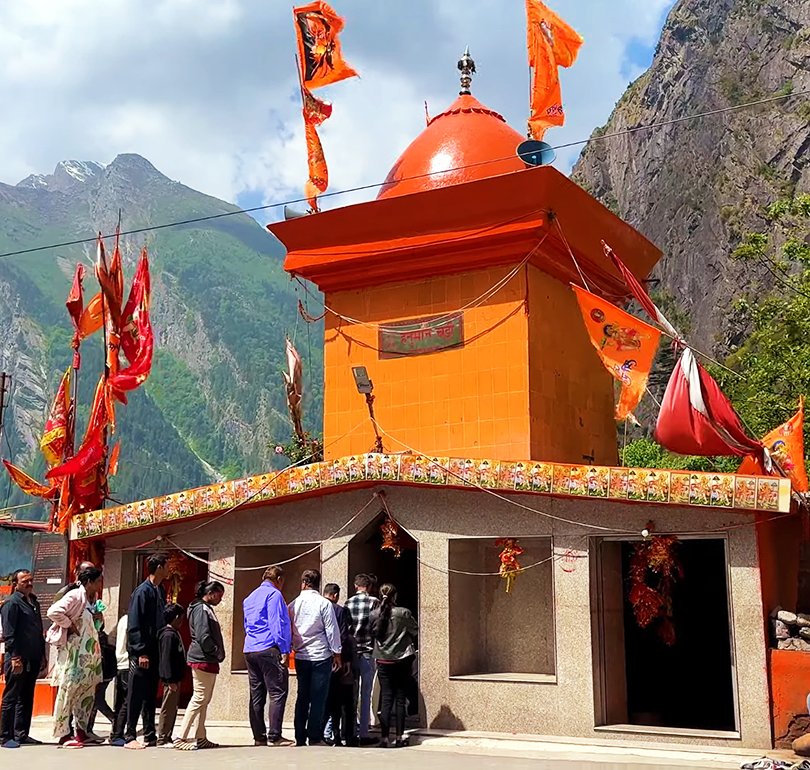
Hanuman Chatti is a small but important temple located about 12 km before Badrinath on the Rishikesh–Badrinath highway. Dedicated to Lord Hanuman, it is a popular stop for pilgrims traveling to Badrinath Dham.
Surrounded by the Alaknanda River and the scenic Himalayas, the temple stands at an elevation of 1,920 meters and is deeply connected with a legendary tale from the Mahabharata.
According to the story, when the Pandavas were on their way to the Himalayas, Bhima (the strongest of the five brothers) encountered an old monkey lying on the path. Filled with pride, Bhima asked the monkey to move, but the monkey (who was none other than Lord Hanuman in disguise) said he was too weak to do so and asked Bhima to lift his tail instead.
To Bhima’s surprise, despite all his strength, he could not even move the monkey’s tail. At that moment, Hanuman revealed his true form and taught Bhima the value of humility, destroying his arrogance.
This powerful story of Hanuman crushing Bhima’s pride is what makes Hanuman Chatti a sacred site for devotees. Pilgrims believe that seeking blessings here ensures a safe journey and divine darshan at Badrinath Temple.
In your Badrinath Temple visit, visiting Hanuman Chatti adds a meaningful stop filled with both spiritual lessons and cultural heritage.
Tapt Kund: Holy Bath Before Entering Badrinath Temple/ तप्त कुंड
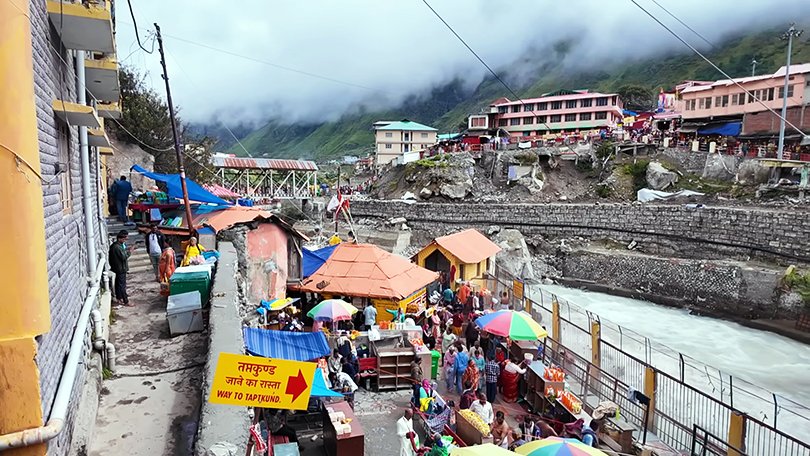
Tapt Kund is a sacred hot water spring located just below the Badrinath Temple on the banks of the Alaknanda River. Every pilgrim visiting the shrine is expected to take a holy dip here before entering the temple for darshan.
In your Badrinath Yatra, Tapt Kund holds a very important place as it is considered the natural purification point for devotees.
The water of Tapt Kund maintains a temperature of around 45°C, even in freezing Himalayan winters, which makes it truly miraculous. According to legends, this hot spring was created by Lord Vishnu himself and is believed to have divine healing powers.
Taking a dip in the kund is said to wash away sins and purify the soul before offering prayers to Lord Vishnu at Badrinath Dham.
Tapt Kund is not only a spiritual site but also a symbol of nature’s wonder in the high Himalayas. Surrounded by snow-clad peaks and the flowing Alaknanda, this sacred spring adds both religious significance and natural beauty to the journey.
For anyone planning the Char Dham Yatra to Badrinath, a holy bath in Tapt Kund is considered an essential ritual before darshan.
Neelkanth Parvat – Sacred Mountain of Lord Shiva in Badrinath/ नीलकंठ पर्वत
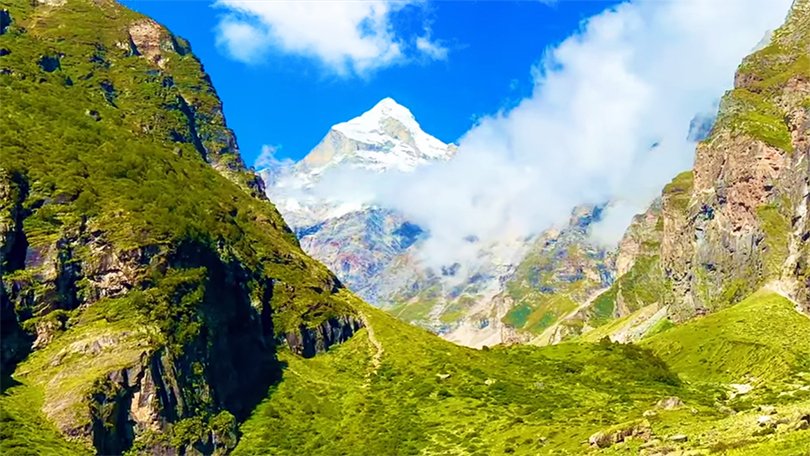
Neelkanth Peak, also known as Neelkanth Parvat, stands tall at an altitude of 6,597 meters (21,640 ft), forming a magnificent backdrop to the Badrinath Temple. Located in the Chamoli district of Uttarakhand, this snow-clad peak is often called the ‘Garhwal Queen’ for its unmatched beauty.
In your Badrinath Dham Yatra, Neelkanth Peak holds both natural and spiritual importance, attracting trekkers, pilgrims, and nature lovers alike.
The name Neelkanth refers to Lord Shiva, symbolizing his blue throat after consuming poison during the Samudra Manthan. According to local beliefs, Neelkanth Peak is considered the sacred abode of Lord Shiva, watching over the shrine of Lord Vishnu at Badrinath.
The first rays of the morning sun hitting the icy slopes of Neelkanth create a golden glow, offering one of the most divine sights for visitors.
For pilgrims, a view of Neelkanth Peak during the Badrinath journey is considered highly auspicious. Trekkers also explore trails around the region to experience its natural beauty up close. Whether you are here for spiritual reasons or simply to admire the Himalayas, Neelkanth Peak adds a majestic charm to your Badrinath Temple visit.
Explore Mana Village in Badrinath Dham Yatra Guide 2026/ माणा गांव
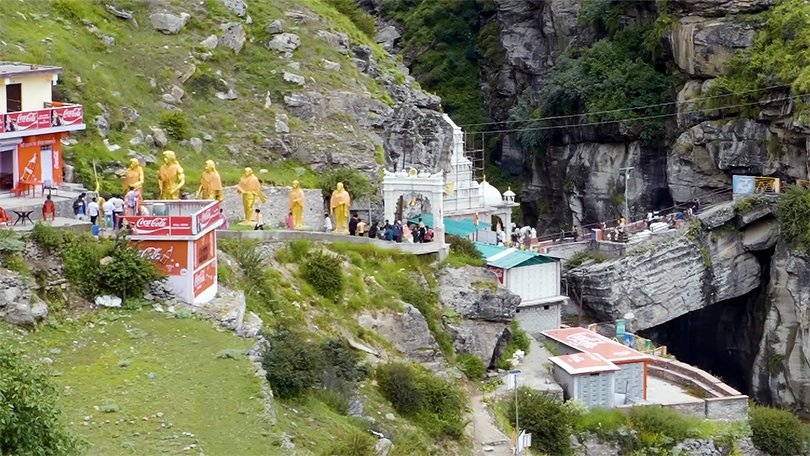
Mana Village, located just 3 km from Badrinath Temple, is popularly known as “India’s First Village” before the Indo-Tibet border. Situated at an elevation of about 3,200 meters, it offers a unique blend of culture, history, and spirituality.
In your Badrinath pilgrimage, Mana Village stands out as a must-visit attraction for pilgrims and travelers alike.
Places to Visit in Mana Village:
Ganesh Gufa:
- This ancient cave is believed to be the spot where Lord Ganesha wrote the Mahabharata, as dictated by Sage Vyas.
- The cave is small but carries immense spiritual significance, attracting devotees who wish to see the place where one of the greatest epics was composed.
- Pilgrims visit here to seek blessings of wisdom and knowledge.
Vyas Gufa:
- Located close to Ganesh Gufa, this cave is where Sage Vyas composed the Mahabharata.
- It is said he stayed here during his meditation and spiritual work, with Lord Ganesha as his scribe.
- The cave remains an important site for devotees and history lovers.
Bhim Pul:
- A natural stone bridge over the Saraswati River, believed to have been placed by Bhima, the strongest Pandava.
- According to legend, Bhima laid the massive rock to help Draupadi and his brothers cross the fast-flowing river on their journey to heaven.
- The spot is now a major attraction, offering both mythological charm and scenic views.
Saraswati River Origin:
- Mana Village is the place where the Saraswati River emerges before disappearing underground.
- The roaring sound of the river here is considered sacred, and many devotees believe the river is still present in a hidden form across India.
- It holds both mythological and spiritual significance.
Woolens, Spices & Handicrafts:
- Mana is also known for its locally woven woolens, herbal spices, and handmade crafts by the villagers.
- Visitors can buy shawls, caps, and traditional items as souvenirs, supporting the local community.
First Indian Tea Shop:
- Popularly known as “India’s First Tea Shop”, it is located just near the Indo-Tibet border.
- Tourists enjoy sipping tea here while proudly taking pictures with the signboard.
- It symbolizes the cultural and geographical importance of Mana as India’s first village.
Charanpaduka – Sacred Footprints of Lord Vishnu near Badrinath/ चरणपादुका
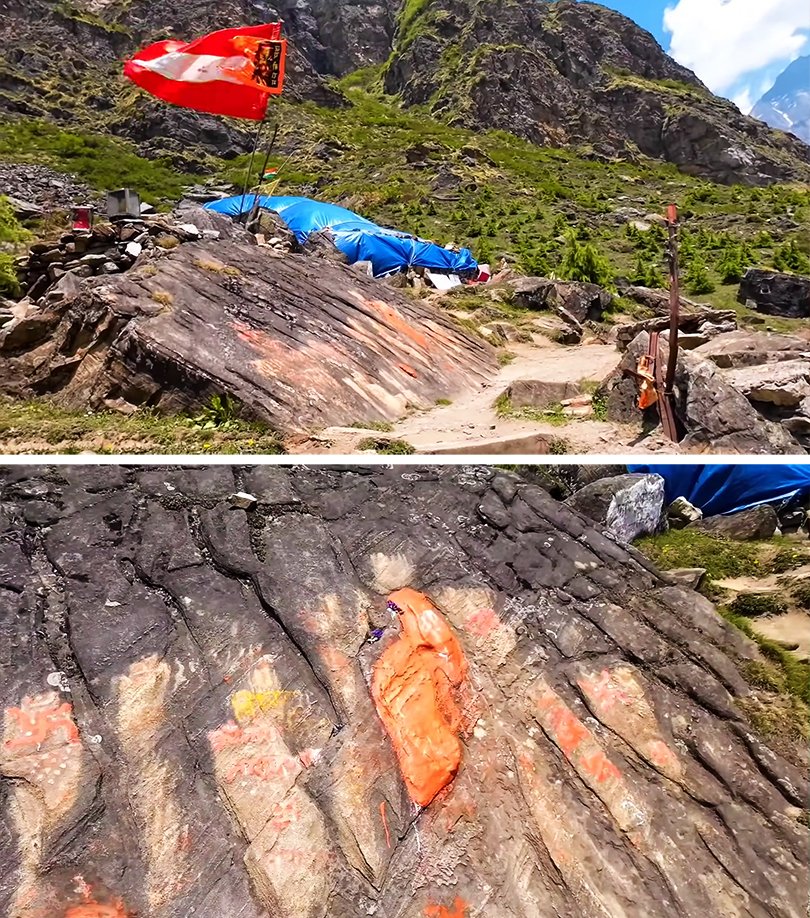
Charanpaduka is a sacred rock located about 3 km from Badrinath Temple, at an altitude of nearly 3,380 meters. The site is famous for the footprints believed to be of Lord Vishnu, marking the place where he first set foot while descending from Vaikuntha.
For pilgrims following the Badrinath Temple guide, Charanpaduka is a spiritual stop that combines mythology with a scenic short trek.
According to legends, Lord Vishnu visited this spot before establishing himself at Badrinath. The footprints on the rock are revered by devotees, symbolizing his divine presence.
The trek to Charanpaduka is steep but rewarding, offering panoramic views of the Neelkanth Peak and the surrounding valleys. Pilgrims often take this short journey as part of their spiritual circuit after darshan at Badrinath Temple.
Besides its religious importance, Charanpaduka is also a favorite for trekkers and nature lovers. The trail passes through meadows, rocky paths, and alpine scenery, making it a beautiful blend of devotion and adventure.
Visiting Charanpaduka during the Badrinath Temple visit adds both spiritual value and natural charm to the overall experience.
Visit Vasudhara Falls in Badrinath Dham Yatra 2026/ वसुधारा जलप्रपात
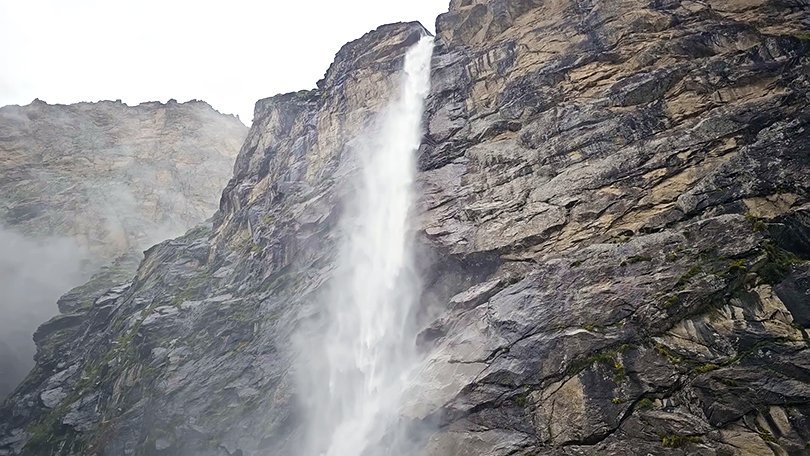
Vasudhara Falls is one of the most stunning natural attractions near Badrinath, located about 9 km from the temple. Situated at an elevation of nearly 3,700 meters, the waterfall drops from a height of 400 feet, offering breathtaking views against the backdrop of snow-clad Himalayan peaks.
According to mythology, Vasudhara Falls is linked with the Pandavas from the Mahabharata. It is believed that the Pandavas crossed this region on their way to heaven.
Local tradition also says that the sacred waters of Vasudhara only touch those who are pure at heart, making it a spiritually significant site for devotees.
The trek to Vasudhara begins from Mana Village, passing through rocky trails and meadows, with panoramic views of the Alaknanda valley. The journey itself is as beautiful as the destination, making it a favorite among trekkers and pilgrims.
Visiting Vasudhara Falls during the Badrinath Temple visit adds a divine touch to the trip, combining mythology, natural beauty, and spiritual belief.
Accommodation in Badrinath Dham (2026)
During your Badrinath Dham Yatra Guide 2026, you can find many stay options:
- GMVN Guest Houses – Affordable and reliable, advance booking available.
- Dharamshalas & Ashrams – Budget stays with basic facilities, run by trusts.
- Hotels & Lodges – From budget rooms to deluxe stays near the temple and market.
- Joshimath (45 km away) – Good alternative for stay when Badrinath is crowded.
Tip: Book early in May–June and carry warm clothes, as nights can be very cold.
Quick Facts – Badrinath Dham Yatra 2026
- Location: Chamoli district, Uttarakhand
- Altitude: 3,133 meters (10,279 ft)
- Deity: Lord Vishnu (Badrinarayan)
- River: On the banks of the Alaknanda River
- Established by: Adi Guru Shankaracharya in the 8th century
- Temple Opening (2026): May (exact date announced before Akshaya Tritiya)
- Temple Closing (2026): November (before winter snowfall)
- Darshan Timings: 4:30 AM – 1:00 PM & 4:00 PM – 9:00 PM
- Nearby Attractions: Mana Village, Tapt Kund, Neelkanth Peak, Hanuman Chatti, Charanpaduka, Vasudhara Falls
- Part of: Char Dham and Chota Char Dham Yatra
Final Thoughts – Badrinath Dham Yatra
The Badrinath Dham Yatra 2026 is more than a pilgrimage—it’s a journey of faith, nature, and Himalayan beauty. From the holy dip at Tapt Kund to darshan at Badrinath Temple and visits to Mana Village, Neelkanth Peak, and Vasudhara Falls, every step offers peace and devotion.
A trip to Badrinath in 2026 promises blessings, unforgettable views, and a truly divine experience.
FAQs – Badrinath Dham Yatra 2026
What is the best time to visit Badrinath Temple in 2026?
The best time to visit Badrinath Temple is from May to June and September to October, when the weather is clear and the roads are safe.
What are the darshan timings of Badrinath Temple in 2026?
Darshan timings are 4:30 AM to 1:00 PM and 4:00 PM to 9:00 PM. The day ends with the Shayan Aarti at around 8:30 PM.
How to reach Badrinath Dham from Haridwar or Rishikesh?
You can reach Badrinath by road via NH-7, with buses and taxis available from Haridwar, Rishikesh, and Dehradun. The nearest railway station is Rishikesh (295 km), and the nearest airport is Jolly Grant, Dehradun (314 km).
Do I need registration for Badrinath Dham Yatra 2026?
Yes, registration is mandatory for all pilgrims. You can register online through the official Char Dham Yatra portal or at registration counters in Haridwar and Rishikesh.
How far is Badrinath from Kedarnath?
The distance from Kedarnath to Badrinath is around 230 km by road, which takes 10–12 hours depending on road and weather conditions.
Is there helicopter service available for Badrinath Dham?
Yes, helicopter services are available during the yatra season from Dehradun and Govindghat. Advance booking is recommended.
Where is Badrinath Temple located?
Badrinath Temple is located in Chamoli district of Uttarakhand, at an elevation of 3,133 meters (10,279 ft), along the banks of the Alaknanda River.
What is the meaning of the word “Badrinath”?
The word Badrinath comes from Badri (wild berry tree) and Nath (Lord), referring to Lord Vishnu, who meditated here while Goddess Lakshmi protected him as a Badri tree.
What are the main attractions near Badrinath Dham?
Major attractions include Mana Village, Tapt Kund, Neelkanth Peak, Charanpaduka, Hanuman Chatti, and Vasudhara Falls.
What is the story of Hanuman Chatti near Badrinath?
Hanuman Chatti is where Lord Hanuman humbled Bhima’s pride during the Mahabharata by asking him to lift his tail, which Bhima failed to do. The temple is 13 km before Badrinath.
How difficult is the trek to Vasudhara Falls?
The trek to Vasudhara Falls is around 6 km from Mana Village, moderately easy, and offers beautiful views of the Alaknanda valley.
Does Badrinath Temple remain open in winter?
No, the temple closes in November due to heavy snowfall. During winter, the deity of Lord Badrinarayan is worshipped at Joshimath.
Is registration free for Char Dham Yatra 2026?
Yes, registration for Char Dham Yatra is completely free. You don’t have to pay any charges for online or offline registration.
Is Badrinath safe for senior citizens in 2026?
Yes, Badrinath is safe for senior citizens if they travel slowly, avoid exertion, carry medicines, and follow medical advice.
How many days are needed for Badrinath Yatra?
2–3 days are enough for darshan and nearby places, while 3–4 days are ideal for a relaxed visit.
Do senior citizens also need to register?
Yes, all pilgrims including senior citizens, children, and foreigners must register before starting the yatra.
Is one registration enough for all four Dhams?
Yes, you only need to register once. The same Yatra e-pass (travel card) is valid for Badrinath, Kedarnath, Gangotri, and Yamunotri.
Can I register on the spot?
Yes, offline registration counters are available at Haridwar, Rishikesh, Uttarkashi, Joshimath, Sonprayag, and other major stops. However, online registration is recommended to save time.
Is registration required for helicopter services to Kedarnath?
Yes, Without registration, you cannot book or board helicopter services for Kedarnath.
What documents are required for registration?
A valid photo ID proof (Aadhar card, voter ID, driving license, or passport), mobile number, and travel details are required.
6 thoughts on “Badrinath Dham Yatra Guide 2026 – Temple, Darshan Timings & Travel Tips | बद्रीनाथ धाम यात्रा”
Comments are closed.