
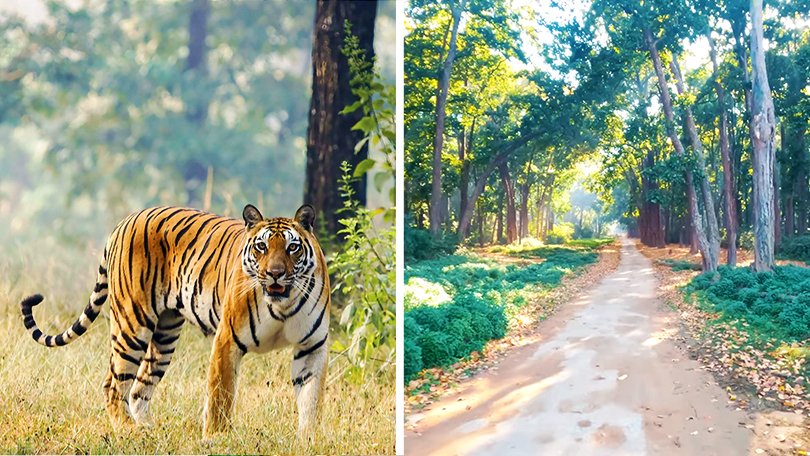
Updated January 2026 – safari zones, booking rules, best season & travel tips refreshed
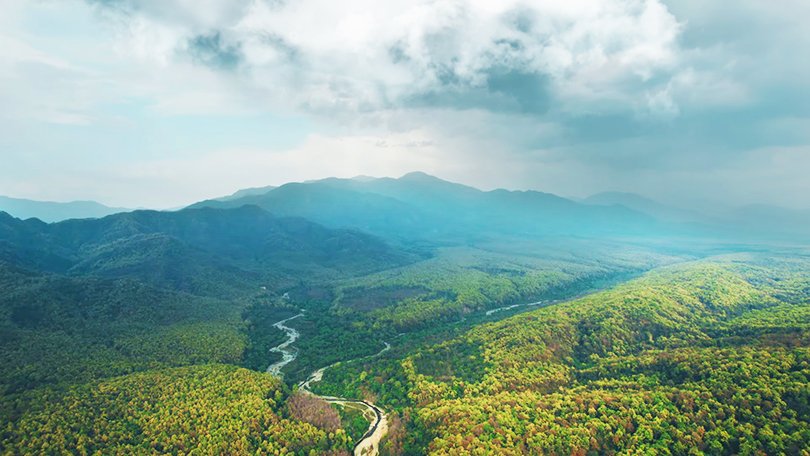
About Jim Corbett National Park – History & Interesting Facts
Jim Corbett National Park is one of India’s most famous and oldest wildlife parks, located in the Nainital district of Uttarakhand. Spread over an area of about 520 square kilometers, the park sits at an elevation between 400 and 1,220 meters (around 1,300–4,000 feet). It is known for its rich sal forests, wide grasslands, winding rivers, and the scenic Himalayan foothills that create a perfect natural home for wild animals and birds.
The park was originally established in 1936 as Hailey National Park to protect the endangered Bengal tiger and other native species. Later, it was renamed after Jim Corbett, a famous hunter turned conservationist who played a key role in saving wildlife in this region.
In 1973, Corbett National Park became the first site where India’s landmark conservation program, Project Tiger, was launched to protect the fast-declining tiger population. Today, the park stands as a proud symbol of India’s efforts to conserve its natural heritage.
Interesting fact:
- First National Park in India – Established in 1936, it set the foundation for future wildlife conservation efforts.
- Home to Bengal Tigers & Elephants – Also shelters leopards, sloth bears, wild boars, and four types of deer: Spotted Deer (Chital), Sambar Deer, Barking Deer (Kakar), and Hog Deer
- Birdwatcher’s Paradise – Over 600 species of birds can be seen here, including hornbills, kingfishers, and eagles.
- Diverse Landscapes – The park features rivers, forests, valleys, hills, and marshlands, supporting rich biodiversity.
- River Ramganga Flows Through the Park – It’s home to crocodiles, gharials, and freshwater fish species.
- Stay Inside the Jungle – Unique forest rest houses like Dhikala FRH offer overnight stays deep inside the core zone.
- Featured in Documentaries – The park has appeared in films and shows, including Man vs Wild with PM Modi and Bear Grylls.
- Strict Rules for Wildlife Protection – No loud noises, no feeding animals, and no stepping out of safari vehicles are allowed.
This Jim Corbett National Park guide is updated for 2026 with the latest safari rules, zone timings, and booking information.
Location & How to Reach Jim Corbett National Park
Located around 250 km from Delhi, the park is easily accessible for travelers and nature lovers. Visitors come here to enjoy jeep safaris, watch elephants, spot exotic birds, and experience the thrill of seeing a tiger in the wild.
In this guide, you’ll find everything you need to plan your trip to Jim Corbett National Park — from the best safari zones and wildlife to see, to how to reach, where to stay, and useful travel tips.
How to Reach:
By Air
- The nearest airport is Pantnagar Airport (PGH), which is about 80 km from Corbett Tiger Reserve. From the airport, you can hire a taxi or take a private cab to reach Ramnagar, the main entry town for the park.
- Delhi’s Indira Gandhi International Airport (about 250 km away) and then travel to Corbett by road or train.
By Train
- The closest railway station is Ramnagar, just 12 km from the park gates. Ramnagar is well connected to major cities:
- Delhi to Ramnagar: about 5–6 hours by direct trains like Ranikhet Express and Corbett Link Express.
- Moradabad to Ramnagar: about 3 hours.
- From Ramnagar railway station, taxis and auto-rickshaws are easily available to reach your resort or safari zone.
By Road / Bus / Car
- Jim Corbett National Park is connected by good roads to many North Indian cities.
- Delhi to Corbett: around 250 km (5–6 hours)
- Nainital to Corbett: around 65 km (2 hours)
- Dehradun to Corbett: around 230 km (6–7 hours)
- Moradabad to Corbett: around 100 km (3 hours)
Regular government and private buses also run between Delhi (ISBT Anand Vihar) and Ramnagar. Many travelers prefer to drive or hire a cab for flexibility and comfort.
Best Time to Visit Jim Corbett National Park
The best time to visit the wildlife reserve depends on what you want to experience—wildlife safaris, birdwatching, or a peaceful nature retreat. The park is open year-round, but different zones have different timings.
Winter (November to February): This is the best season for wildlife sightings, especially tigers and elephants. The weather is cool and pleasant, and all major safari zones, including Dhikala, remain open. It’s also a great time for birdwatching as many migratory birds arrive.
Summer (March to June): Summer months are hot, but animal sightings are frequent as wildlife gathers near water bodies. If you’re comfortable with the heat, it’s a good time for safaris in Bijrani, Jhirna, and Dhikala zones.
Monsoon (July to October): During the monsoon, some zones like Jhirna and Dhela stay open, while others like Dhikala and Bijrani close due to heavy rains. This is the off-season, so you’ll find fewer tourists and lower prices, but safaris may be limited depending on weather conditions.
For the best overall experience, plan your visit between November and April, when the park is fully open and wildlife sightings are at their peak.
Smart Travel Tips for Visiting Jim Corbett National Park
To make the most of your visit to Corbett Tiger Reserve, here are some quick tips:
- Book in Advance: Safari slots and forest lodges fill up fast, especially in peak season (Nov–June).
- Pick the Right Zone: Dhikala is great for longer stays, Bijrani for day safaris.
- Carry ID: A valid photo ID (used during booking) is mandatory for entry.
- Dress Right: Wear neutral-colored clothes and comfy shoes for safaris.
- Pack Essentials: Carry water, sunscreen, insect repellent, binoculars, and a camera.
- Follow Rules: Don’t step out of the vehicle, avoid loud noises, and never feed animals.
- Respect Nature & Locals: Avoid littering, support local guides, and be mindful of the environment.
These simple tips will help ensure a smooth, safe, and memorable experience at Jim Corbett National Park.
Explore the Main Zones of Jim Corbett National Park
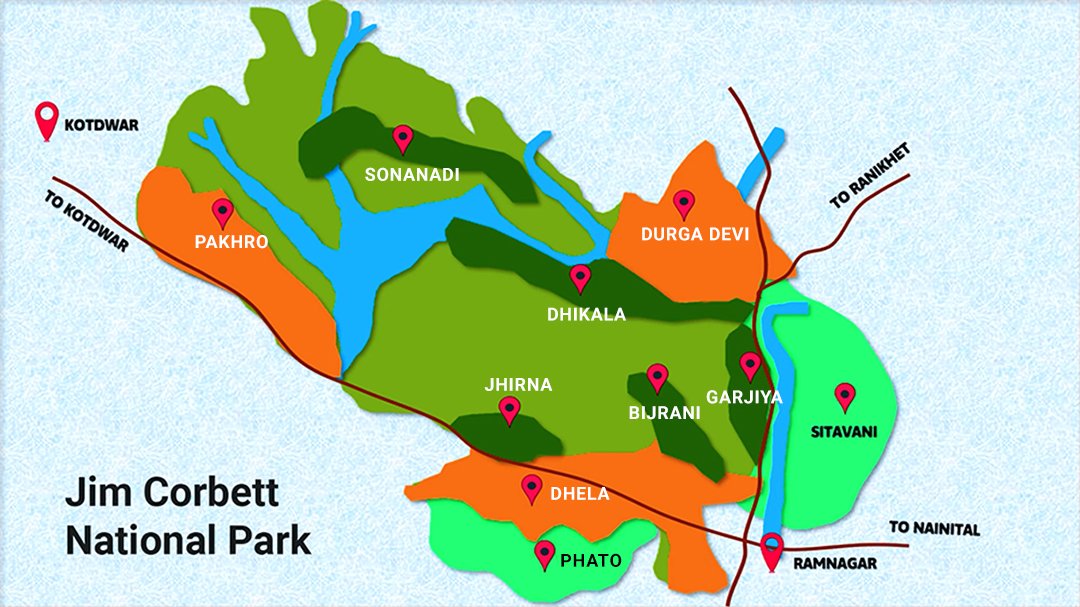
The Corbett Tiger Reserve is divided into multiple safari zones, each offering a unique experience of the jungle. From dense forests and riverbeds to wide grasslands and hills, every zone has its own charm, wildlife, and landscape. Choosing the right zone can make your safari more exciting, whether you’re hoping to spot a tiger, enjoy peaceful birdwatching, or simply take in the natural beauty.
Dhikala Zone
Dhikala is the largest and most popular zone in Jim Corbett National Park. It is known for open grasslands, dense forests, and a high chance of spotting tigers and elephants. Only canter safaris and night stays at forest rest houses are allowed here. Dhikala opens from 15 November to 15 June every year.
Bijrani Zone
Located near Ramnagar, Bijrani is famous for its beautiful landscape and frequent tiger sightings. It’s a great zone for jeep safaris and is open from mid-October to mid-June. It’s ideal for first-time visitors who want a mix of jungle scenery and wildlife.
Jhirna Zone
Jhirna is open all year round, even during the monsoon season. It has dry forests and grasslands, which are good for spotting deer, sloth bears, and sometimes tigers. It’s easily accessible and perfect for travelers visiting in the off-season.
Dhela Zone
Dhela is another year-round zone in Jim Corbett National Park. It is rich in birdlife and is perfect for birdwatchers and nature lovers. The forest here is peaceful and less crowded compared to other zones.
Durga Devi Zone
This zone is located in the hilly area of the park and is known for its scenic views and riverside drives. It’s a good place to spot leopards, elephants, and exotic birds. Durga Devi is open from mid-November to mid-June.
Sitabani Buffer Zone
Though not officially part of the core Jim Corbett National Park, Sitabani is a buffer zone open to all. It’s great for peaceful nature drives, birdwatching, and visiting temples, but tiger sightings are rare here.
Each zone in Jim Corbett National Park offers a unique jungle experience. Whether you’re looking for a thrilling safari or a quiet walk with birds, there’s a zone for every type of traveler.
Wildlife in Jim Corbett National Park – Animals & Birds You’ll Love to Spot
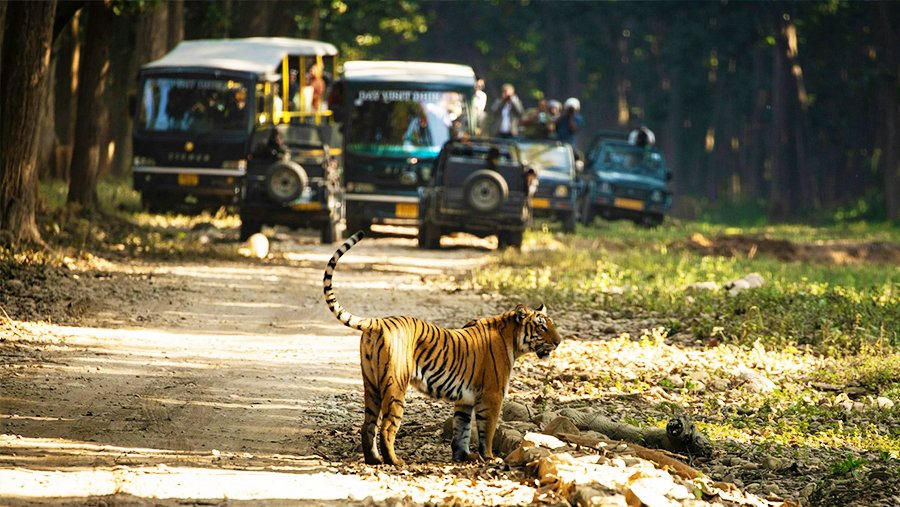
Corbett Tiger Reserve is one of the best places in India to see wild animals in their natural habitat. Sprawling across 520 square kilometers in the foothills of Uttarakhand, the park is home to a wide variety of wildlife — from big predators to gentle herbivores and colorful birds.
The star attraction here is the Bengal tiger, often seen roaming the grasslands or near riverbanks, especially in zones like Dhikala and Bijrani. You can also spot Asian elephants, leopards, sloth bears, wild boars, and jackals.
The park is famous for its deer population, which includes spotted deer (chital), sambar deer, hog deer, and the shy barking deer.
Jim Corbett is also a paradise for birdwatchers. With over 600 species of birds, it’s one of the richest birding spots in India. You can see kingfishers, hornbills, crested serpent eagles, woodpeckers, parakeets, and many migratory birds during winter months.
Zones like Dhela, Jhirna, and Sitabani are especially great for birdwatching.
The Ramganga River, which flows through the park, supports a healthy population of mugger crocodiles, gharial, and otters, making riverside safaris an exciting experience.
Whether you’re a wildlife enthusiast or a casual traveler, every safari in this wildlife reserve offers a chance to witness nature at its best.
Types of Safaris & How to Book
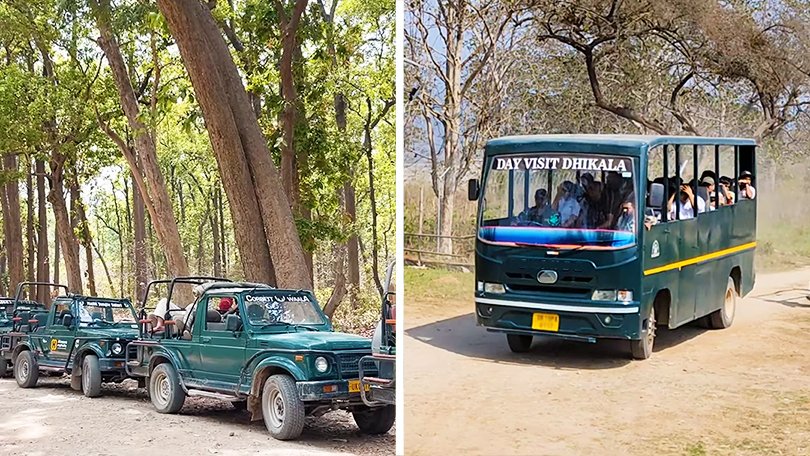
Visitors to Corbett National Park can explore the wild through different types of safaris, each offering a unique jungle experience. Whether you’re hoping to spot a tiger, enjoy peaceful birdwatching, or soak in the beauty of the forest, there’s a safari option for every kind of traveler.
Jeep Safari
The most popular and thrilling way to explore the Corbett jungle is by open jeep safari. It allows you to travel deep into various zones like Bijrani, Jhirna, Dhela, and Durga Devi.
A jeep can carry up to 6 people and is ideal for photography and close wildlife sightings. Jeep safaris are available in both morning and afternoon slots.
Canter Safari
If you’re planning to visit the Dhikala Zone, then the canter safari is your only option unless you stay overnight in the forest rest house.
A canter is an open bus that carries 16–18 people and follows a fixed route. It’s a great budget-friendly choice to experience one of the most wildlife-rich areas of the park.
Elephant Safari (Currently restricted)
Earlier, elephant safaris were allowed in some zones like Dhikala, but due to conservation rules, they are now highly limited or discontinued. Check the official booking portal for the latest updates if you’re interested in this experience.
How to Book Safaris
Safari bookings for Corbett Tiger Reserve are done online through the official government portal or authorized booking websites.
It is recommended to book well in advance, especially during the peak season (November to June), as slots fill up quickly.
You need to select the zone, type of safari, date, and provide valid ID details. Both Indian and foreign tourists are required to carry original ID proof (like Aadhaar, passport, or driving license) during the safari.
Booking your safari the right way ensures a smooth and enjoyable wildlife experience in this wildlife reserve.
Always follow the park rules, respect nature, and carry essentials like water, binoculars, and cameras.
Where to Stay in Jim Corbett National Park
There are plenty of accommodation options near Corbett forest, catering to every type of traveler — from luxury seekers to budget explorers. Most stays are located around Ramnagar, the main entry point to the park, and near popular safari zones like Dhikala, Bijrani, and Jhirna.
If you want to stay inside the forest for a raw and thrilling experience, you can book government-run Forest Rest Houses (FRHs) in zones like Dhikala, Gairal, and Bijrani. These offer basic facilities but give you a unique chance to hear the jungle sounds at night and go for early morning safaris.
Outside the park, you’ll find a range of resorts, hotels, homestays, and eco-lodges, many of which are built along the Kosi River or surrounded by forests. Some popular luxury resorts include Taj Corbett Resort & Spa, Aahana – The Corbett Wilderness, and The Riverview Retreat.
For mid-range and budget travelers, options like Corbett Machaan Resort, The Den Corbett, and Corbett View Resort offer comfort without breaking the bank.
Most resorts can help arrange safari bookings, guided walks, birdwatching, and even local cultural experiences — making your trip to the wildlife reserve more memorable.
Why You Should Visit Corbett National Park
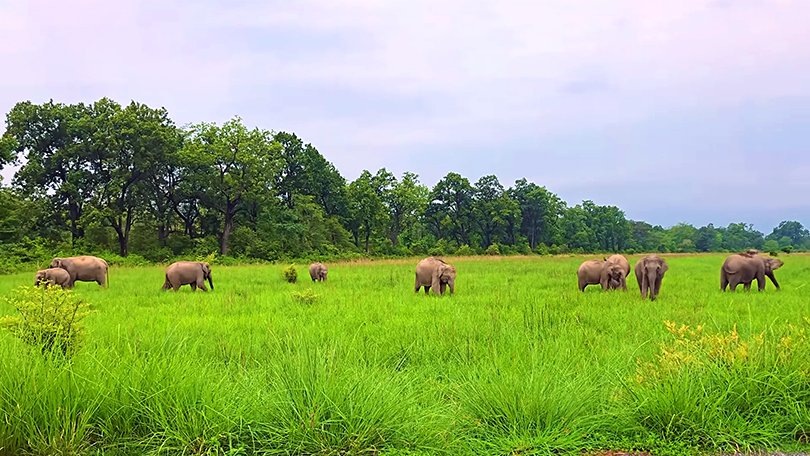
If you’ve ever dreamed of hearing the roar of a tiger echo through the jungle or watching elephants walk freely in their natural home, this wildlife reserve makes that dream real.
This isn’t just a wildlife destination — it’s a place where you feel the pulse of the forest, where adventure meets peace, and every trail leads to a new discovery.
Beyond being India’s oldest national park, Corbett is a living story of conservation, courage, and the beauty of the wild. From thrilling safaris and birdwatching to quiet moments by the river, it offers an experience that touches every kind of traveler.
You might come here for the tigers, but you’ll leave with memories of misty mornings, rustling sal trees, and a deeper connection to nature.
Whether you’re planning a weekend getaway or a wildlife-filled vacation, Corbett National Park is one of those rare places that stays with you — long after the journey ends.
Jim Corbett Museum – Step Into the Legacy of a Legend
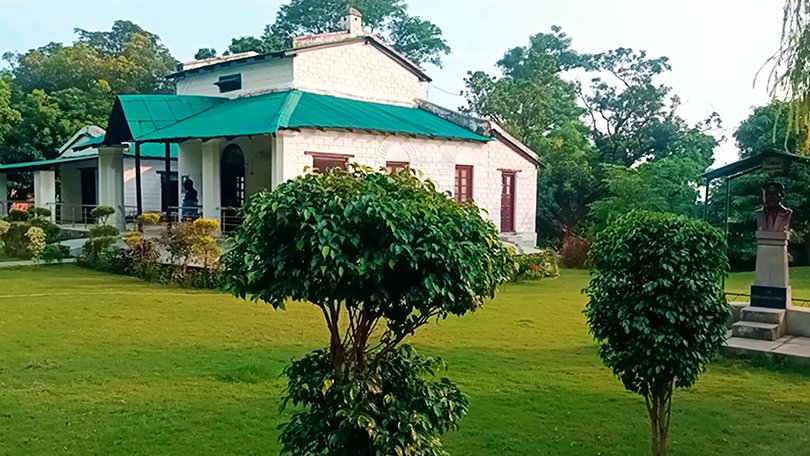
Located in Kaladhungi, just 30 km from Ramnagar, the Jim Corbett National Park Museum is a must-visit for every wildlife lover and history enthusiast. Housed in the very bungalow where Jim Corbett once lived, the museum offers an intimate glimpse into the life and legacy of the legendary hunter-turned-conservationist.
Who Was Jim Corbett?
Jim Corbett was a legendary British-Indian hunter, tracker, and later a passionate conservationist, best known for hunting several man-eating tigers and leopards that terrorized villages in the Kumaon region.
He is said to have killed over a dozen man-eaters, including the infamous Champawat Tiger, which alone claimed over 400 lives.
His courage, deep knowledge of the jungle, and respect for wildlife earned him the trust of locals. Later in life, Corbett became a strong advocate for wildlife protection—his legacy lives on through Jim Corbett National Park, India’s first national park named in his honor.
This heritage museum showcases personal belongings of Jim Corbett, vintage photographs, letters, hunting gear, and stories that reflect his deep connection with the forests and wildlife of Uttarakhand. It’s not just a museum—it’s a tribute to India’s wildlife conservation history.
Surrounded by lush greenery, the museum is also a peaceful spot for photography and nature walks. It’s open to visitors throughout the year and is best visited during your trip to or from Corbett National Park.
Whether you’re on a family vacation or a solo wildlife trip, this museum enriches your understanding of the park’s roots and purpose.
How to Reach Jim Corbett Museum:
- The Jim Corbett Museum is located in Kaladhungi, about 30 km from Ramnagar—the gateway to Corbett National Park.
- You can easily reach the museum by road via taxis or local buses from Ramnagar, Haldwani, or Nainital.
Nearby Places to Visit Around Jim Corbett National Park
While Corbett Tiger Reserve is the main attraction, there are several scenic and culturally rich places nearby that are worth exploring. These spots add more charm to your trip and help you experience the beauty and diversity of Uttarakhand beyond the jungle.
Located around 65 km from Jim Corbett National Park, Nainital is a popular hill station known for its peaceful lakes, colonial charm, and pleasant weather. You can enjoy boating in Naini Lake, explore local markets, or visit viewpoints like Snow View and Tiffin Top.
Garjiya Devi Temple
Just about 14 km from Ramnagar, this ancient temple is perched on a large rock in the middle of the Kosi River. Dedicated to Goddess Garjiya, it’s one of the most visited spiritual sites near the park. The view from the temple is also a treat for nature lovers.
Corbett Falls
Located around 25 km from Ramnagar, Corbett Falls is a beautiful picnic spot surrounded by thick teak forests. The sound of cascading water and chirping birds makes it a peaceful getaway for visitors after a jungle safari.
Around 80 km away, Ranikhet is a serene hill town known for its pine forests, open meadows, and stunning views of the Himalayas. It’s perfect for those looking to relax after an adventurous wildlife trip.
Sitabani Forest Reserve
Situated close to the park, Sitabani is not a part of the main Jim Corbett National Park zones, but it’s ideal for birdwatching and nature walks. Mythologically linked to the Ramayana, it also attracts those interested in cultural heritage.
FAQ – Jim Corbett National Park
Where is Jim Corbett National Park located?
Jim Corbett National Park is located in the Nainital district of Uttarakhand, India. The park spans over an area of 520 square kilometers and sits in the beautiful foothills of the Himalayas.
What is the best time to visit Jim Corbett National Park?
The best time to visit Jim Corbett National Park is between November and June. This period offers pleasant weather and higher chances of spotting wildlife, especially tigers.
How can I reach Jim Corbett National Park?
You can reach the park by road, train, or air:
By Air: The nearest airport is Pantnagar (about 80 km).
By Train: The closest station is Ramnagar, just 12 km from the park.
By Road: It is well-connected to Delhi (240 km), Nainital (66 km), and Ranikhet (112 km).
Why is Jim Corbett National Park famous?
Jim Corbett National Park is India’s oldest and most popular wildlife sanctuary, known for being the first park to launch Project Tiger in 1973. It’s famous for Bengal tigers, rich biodiversity, and scenic landscapes.
Is Jim Corbett National Park open in monsoon 2026?
Yes, Jim Corbett National Park is partially open during the monsoon season (July–October 2026).
Zones like Jhirna and Dhela usually remain open, while Dhikala and Bijrani are closed due to heavy rainfall.
Which safari zone has the highest tiger sighting in Corbett?
The Dhikala Zone has the highest chance of tiger sightings in Jim Corbett National Park, followed by Bijrani.
Dhikala is known for open grasslands and riverbeds, making wildlife easier to spot.
Which are the safari zones in Jim Corbett National Park?
There are six main zones for safari: Dhikala, Bijrani, Jhirna, Dhela, Durgadevi, and Pakhro. Each zone offers unique wildlife experiences and natural beauty. Pakhro zone access depends on forest department permission.
How can I book a safari in Jim Corbett National Park?
Safaris can be booked online through the official Jim Corbett National Park website or authorized forest department portals. You can choose jeep safaris, canter safaris, or elephant rides in selected zones.
What kind of wildlife can I see in the park?
Jim Corbett National Park is home to Royal Bengal tigers, elephants, leopards, sloth bears, and four types of deer – chital, sambhar, barking deer, and hog deer. It also hosts over 600 species of birds.
Is Jim Corbett worth visiting in 2026?
Yes, Jim Corbett is absolutely worth visiting in 2026. The park is fully operational with updated safari rules, open zones, and a high chance of wildlife sightings, making it ideal for nature lovers, families, and first-time safari visitors.
Which zone is best for first-time visitors to Corbett?
For first-time visitors, Bijrani Zone is the best choice. It offers beautiful landscapes, good chances of tiger sightings, easy access from Ramnagar, and comfortable jeep safaris suitable for beginners.
Are there accommodation options inside the park?
Yes, the park has forest rest houses like Dhikala, Bijrani, and Sultan, managed by the forest department. Outside the park, you’ll find a wide range of hotels, resorts, and eco-lodges in Ramnagar and nearby areas.
Is Jim Corbett National Park safe for tourists?
Yes, the park is safe for tourists. All safaris are guided by trained drivers and naturalists. Visitors must follow the park rules and avoid getting out of vehicles during safaris.
Can I visit Jim Corbett National Park with kids and family?
Absolutely! Jim Corbett is a family-friendly destination. The safaris are suitable for kids, and many resorts offer nature-based activities, making it an educational and exciting trip for children.
Is Jim Corbett better than Ranthambore?
Both are excellent, but Jim Corbett is better for nature lovers and a peaceful jungle experience, while Ranthambore is better for higher chances of tiger sightings. Corbett offers dense forests, rivers, and birdlife, whereas Ranthambore has open terrain and historic forts.
How many safaris are enough in Jim Corbett?
2 to 3 safaris are usually enough to experience Jim Corbett properly. Multiple safaris increase your chances of spotting wildlife like tigers, elephants, and deer, as animal movement varies by time and zone.
1 thought on “Jim Corbett National Park Travel & Safari Guide (2026)/ जिम कॉर्बेट राष्ट्रीय उद्यान”
Comments are closed.